The term "fractional" has become common in the COO and CFO space. But operational support — the hands-on work of improving processes, managing IT implementations, and structuring execution — hasn't followed the same path. Most companies either hire full-time or engage a consulting firm that charges for deliverables and then disappears.
There's a better model for companies in between: a fractional operations partner that embeds in your team, learns your context, and stays through implementation.
Full-time vs. fractional vs. consulting: what's the difference?
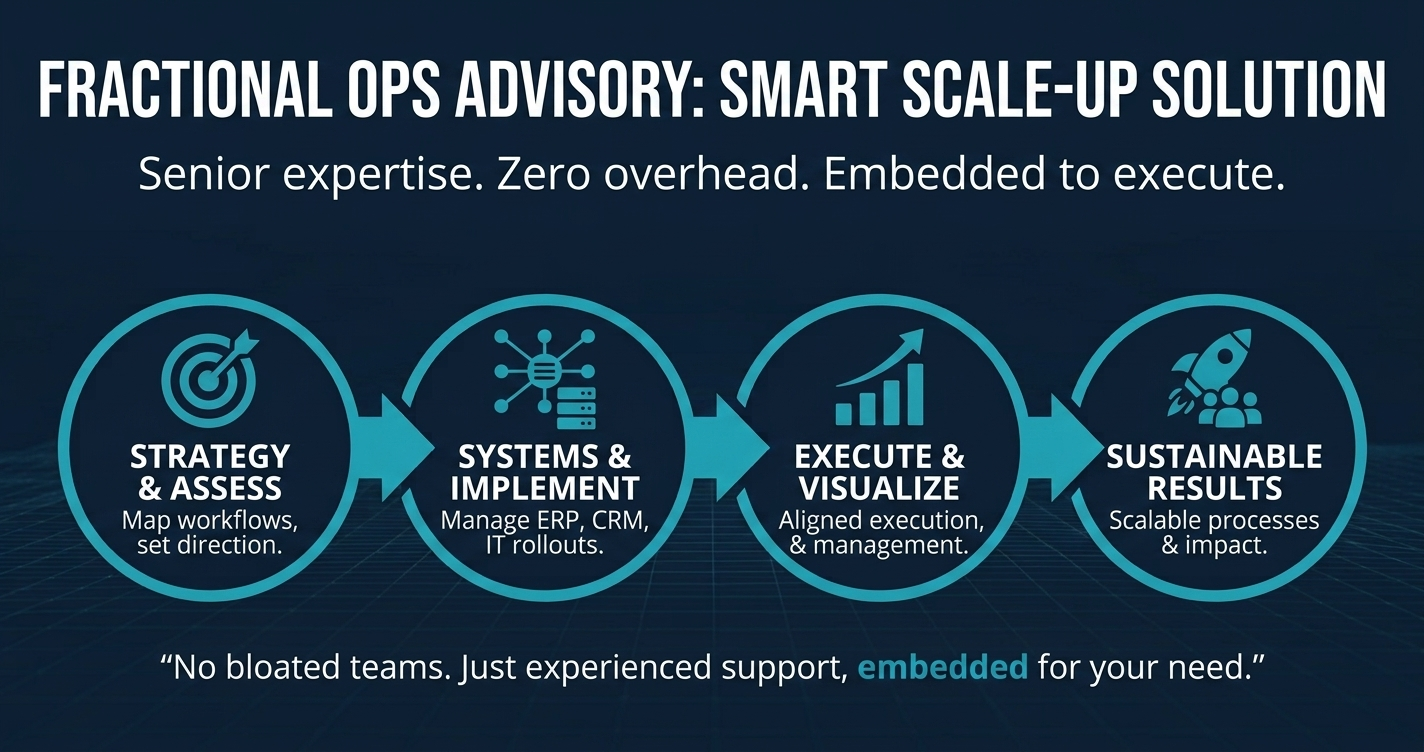
What a fractional operations partner actually does
The scope varies by engagement, but the core is consistent: embed, assess, build, and stay through execution. Typical work includes:
- ✦Managing IT implementations (ERP, CRM, SaaS platform rollouts) without the cost of a full-time PM
- ✦Mapping and optimizing operational workflows to eliminate bottlenecks and reduce cycle time
- ✦Building dashboards and reporting systems so leadership has real visibility into performance
- ✦Supporting product development teams on roadmap structure, vendor management, and go-to-market execution
- ✦Applying Lean Office and Six Sigma methodology to administrative and service processes
How to know if you need one
A fractional operations partner makes sense when:
- ✦You're growing fast and the operational infrastructure hasn't kept up with the business
- ✦You have a major initiative — IT rollout, process overhaul, new product launch — but no one internally to lead it
- ✦You've hired consultants who delivered recommendations that never got implemented
- ✦You can't justify a $200k/year operations hire but you need that level of expertise
The key difference from a traditional consultant: a fractional partner doesn't just tell you what to do. They stay and help you do it — adapting to your reality rather than a generic playbook.
"No bloated teams. No generic frameworks. Just experienced execution support, embedded in your operation for as long as you need it."
Want to explore what a fractional engagement looks like for your company?
Schedule a Conversation